











Projects · What I'm known for

Emoji Mixer
Library that turns two emojis into a Google Emoji Kitchen image URL, for JavaScript, Python, Rust, Go, PHP, Ruby and .NET. Downloaded over 120,000 times and depended on by 1,200+ repositories.
20 photos

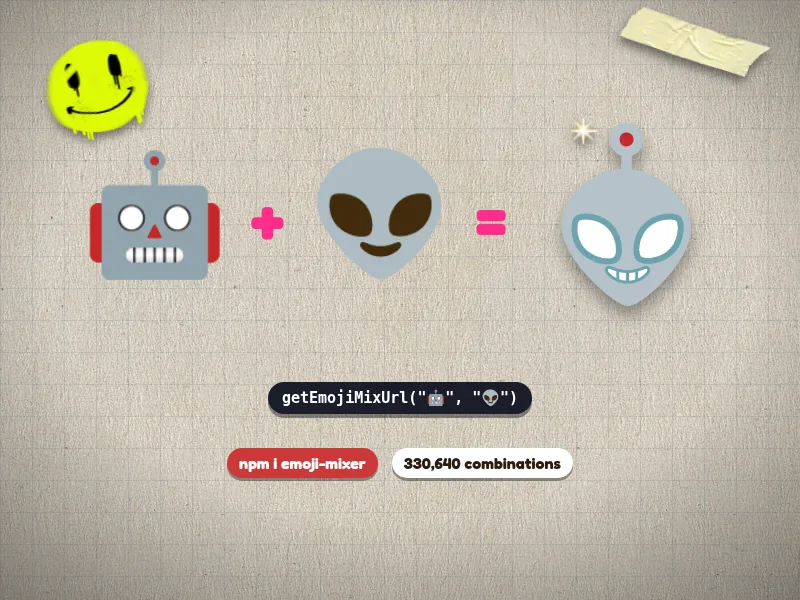
🤖 + 👽 
🐱 + 🎈 
☕ + 🌮 
🎃 + 👻 
🌵 + 🐢 
🦊 + 🍕 
🌈 + 🐸 
🍓 + 🐻 
🔥 + 🧊 
🦄 + 🍩 
🐧 + 🎂 
🍄 + 🐌 
🐳 + 🌊 
🥑 + 😎 
💀 + 🌹 
🐝 + 🌸 
🧁 + 🐰 
👻 + 🍭 
🦉 + 📚 
🤠 + 🐮
Google's Emoji Kitchen combines two emojis into a new sticker, but there's no official API for it: you need to know which pairs exist and which release date each image was published under. emoji-mixer answers that question from a bundled compatibility database and builds the image URL.
import getEmojiMixUrl from "emoji-mixer";

getEmojiMixUrl("🤖", "👽");
// https://www.gstatic.com/android/keyboard/emojikitchen/20201001/u1f916/u1f916_u1f47d.pngHighlights#
- 619 base emojis, 330,640 valid combinations, looked up in both directions and resolved to the newest published version of each pair.
- 99 MB down to 2.9 MB. The raw compatibility data is huge and mostly repeated strings. I rewrote it into two lookup tables (unique codepoints and unique release dates) with each pair stored as a pair of indexes, which cut the shipped data by roughly 34x without losing anything.
- Written in TypeScript and shipped as an ES module with generated type declarations;
require()still works on Node 20.19+. - Native packages for eight ecosystems: npm, PyPI, crates.io, Go, JSR, Packagist, RubyGems and NuGet, each with the same API in its own language's style and all reading the same compressed database.
- A TypeScript converter rebuilds the compressed database from the Emoji Kitchen metadata when new mixes are published, and CI opens a data refresh pull request every week.
Downloads#
Every registry it's published to, kept current. The download count at the top is all of these added up.
| Registry | Package | Downloads |
|---|---|---|
| npm | emoji-mixer | 128,033 |
| PyPI | emoji-mixer | 1,556 |
| RubyGems | emoji_mixer | 554 |
| NuGet | EmojiMixer | 214 |
| crates.io | emoji-mixer | 52 |
| JSR | @mattfor/emoji-mixer | 26 |
| Packagist | mattfor/emoji-mixer | 3 |
Go modules are fetched straight from the source repository, so there's no download count to show for Go.
Where it came from#
It grew out of the alchemy command in a Discord bot I wrote for a roleplay server (grand-archives-discord-bot). Other people wanted the same lookup, so I pulled it out into a package, and it's now used by over a thousand repositories on GitHub.